Dating After a Breakup: Why No Algorithm Can Tell You Who to Love | Anxiety Therapist Chicago, IL

When we’re feeling tired, stuck, overwhelmed, and overstimulated, it’s easy to automate our tough decisions for our convenience. Add in a painful breakup and the thought of starting to date again, and we want to feel some sense of relief. We want our problems to be solved.
We can’t handle “another thing” on our to-do lists that continually grows out of control because there’s too much on our plates. It makes perfect sense.
In this blog, I share my perspective on an episode of Black Mirror, specifically, “Hang the DJ”, about what they get right about tech, relationships, and learning to trust our intuition. I’ve collaborated with Dr. Dan LaLuna of Psychological Testing Services to get his take from “Boyfriend on Demand” on how receiving a diagnosis can affect relationships in the age of AI. You can read his thoughts in the blog linked here. The important takeaway we both want to emphasize from both of our essays is that:
People change. We want to be the best version of ourselves with a diagnosis. We don’t want to be distilled into it.
Why We Crave Certainty in Relationships
In season four of Black Mirror, episode four, “Hang the DJ”, we see how Frank and Amy have entrusted a dating system to help them find a compatible match. Although this episode aired almost a decade ago, in 2026, the relevance is still applicable: we want to find a special someone whom we connect with on a deeper level and build a life together.
When we’re feeling very anxious, whether it’s our first date ever with someone new or starting to date again after a painful breakup, it feels like there is so much at stake. First impressions matter. But beyond that, we want to know that someone we’re interested in dating will accept us before we show them our vulnerabilities. After being hurt before, we want reassurance that we’re making the right choice in choosing our next partner.
By having that certainty, we feel safe. But the problem is that in relationships, there is no guarantee, and that’s the risk. As an anxiety therapist in Chicago, IL, I often see people struggling to differentiate between anxiety, intuition, and the desire for certainty after the end of a relationship.
Algorithms in dating apps help make finding a compatible partner easier and more convenient. Dating apps promise efficiency, but they cannot guarantee connection. We don’t want to waste our time by meeting in real life with someone who doesn’t share similar interests or values.
The Problem With Outsourcing Our Decisions
The constant swiping and gamification of dating apps do a number on our bodies. Dating fatigue occurs. We become overstimulated, yet at the same time, numb to what our bodies are trying to tell us that we need - rest and to slow down. The algorithms filter out potential partners based on what we value, because after a breakup or divorce, many people assume they know exactly what they’re looking for. But if we’re willing to step outside of the rigid system, including our expectations, we will find someone whom we unexpectedly connect with.
We then can create more opportunities to develop trust in our own judgment. We can make mistakes and learn from them. When we care about someone, we’re willing to take the risk of putting our hearts on the line. We’re willing to navigate through the messy, uncomfortable, challenging, and rewarding experiences to build a life with someone special.
To find someone who makes us feel safe.
Who we can laugh with.
Someone we can get through conflicts with.
To be wanted by someone.
To be chosen.
To be seen and accepted.
That's what's really at stake when we swipe, scroll, and search.
Frank's Biggest Struggle Was Learning to Trust Himself
In this episode, Frank was forced to stay in a miserable relationship with someone he couldn’t leave because the algorithm said so. How many people wait until it’s the right moment to leave their relationship? If you can relate to Frank’s experience, you know the familiar feeling of being trapped and the powerlessness it comes with.
When he was freed from his relationship and reconnected with Amy, he embodied what many people who’ve been in toxic relationships or painful breakups desperately want answers to: Is this the right person for me?
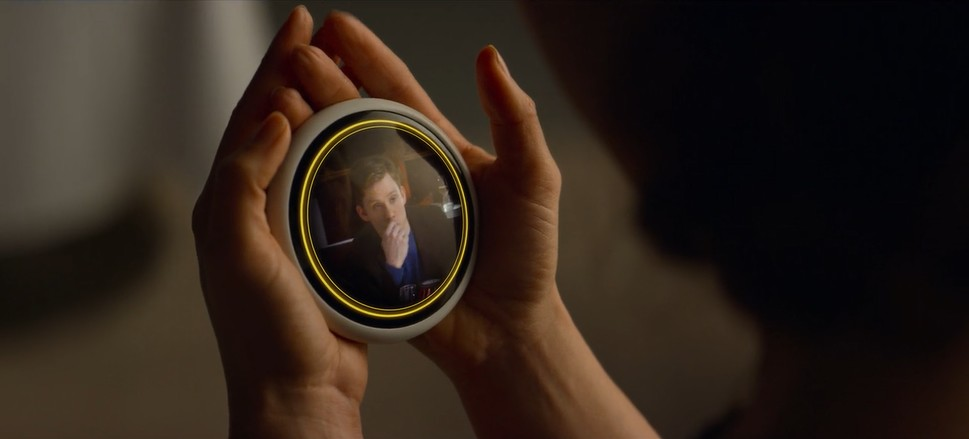
Beneath that question is another one: Can I trust myself to know this time around?
Like many people after a breakup, there is an underlying fear of repeating the same mistake and ending up in the same place again in a new relationship. If you were in a toxic and abusive relationship, you are waiting for the other shoe to drop. You need to practice building trust in your intuition and skills to communicate your boundaries.
This is where therapy can help. Just as Frank sought certainty through an algorithm, people seek certainty through a diagnosis. Check out my blog that discusses “Why Do I Keep Choosing the Same Type of Partner?”
A Diagnosis Explains You. It Doesn't Define You.
The desire for certainty doesn't only show up in dating. It also shows up in how we understand ourselves. For clients who feel lost, confused, and “not normal,” they want clarity to move forward. They experience symptoms such as chronic worrying, poor organization, forgetfulness, low self-esteem, difficulty with social cues, mood changes, and more. It’s paralyzing. They’ve lived in uncertainty for such a long time that they decide that enough is enough. They don’t want to feel stuck any longer.
Let me introduce you to Dr. Dan Laluna of Psychological Testing Services, who specializes in psychological and neuropsychological testing services. He looks at how these presenting symptoms and concerns can negatively impact one’s life. Dr. Dan provides testing to help individuals (and their families) obtain diagnostic clarification to identify areas in one’s life that are a significant source of distress. By providing recommendations and accommodations based on an accurate diagnosis, Dr. Dan offers the clarity and tools many clients are looking for.
Having a diagnosis gives clients the context on what they can do to reduce their symptoms. It is not a prison sentence to who they can become. You get to decide where you go next.
What a Diagnosis Can and Can't Tell You About Love
With all of the diagnoses that have been talked about openly in the media, whether they are socially accepted (i.e., ADHD, autism) or still negatively stigmatized (i.e., Borderline Personality Disorder, Narcissistic Personality Disorder), I ask Dr. Dan about his expertise below.
Shirley: For someone who is diagnosed with (ADHD, Autism, Borderline Personality Disorder, and Narcissistic Personality Disorder), how might understanding a diagnosis help someone navigate relationships more effectively?
Dr. Dan: Similar symptoms may overlap across different diagnoses and so clarifying the root of where symptoms come from can be crucial in knowing exactly why one is feeling the way they are. Understanding a diagnosis takes away the guessing game and when done correctly can actually be a empowering due to an increased understanding of one’s self. By understanding one’s self and aspects of his or her identity, this can help them be their most authentic self with their romantic partners. Better understanding of one’s diagnoses can also help understand their communication style.
Shirley: What strengths often accompany neurodivergence that are overlooked in dating conversations?
Dr. Dan: Individuals who are neurodivergent tend to place a high value on consistency and commitment. They also tend to have personality characteristics and traits, such as loyalty, directness, and authenticity. Additionally, strengths include attention to detail and a need for routine/structure. These are key strengths in personality and communication style that can foster openness and understanding within dating conversations and relationships.
Shirley: How do diagnoses influence communication, conflict, and intimacy?
Dr. Dan: Diagnoses can influence communication, conflict, and intimacy depending on the specific diagnoses. For example, if one tends to struggle with mood disorders or anxiety, they may internalize distress, struggle communicating, and not be the most honest or authentic version of themselves with their partner.
If one is diagnosed with Autism Spectrum Disorder, for example, communication is a key component of presentation and difficulties. It is important that the romantic partner of the one diagnosed with Autism is aware of social communication and language deficits that may impact everyday life and conversations. For example, the individual with Autism may take things too literally or hyperfocus on specific details that may not have crossed the romantic partner’s mind. If one is diagnosed with anxiety or depression, it is important that he or she is able to communicate internal thoughts and feelings, as others may not be cognizant of what is going on internally. For example, it may look like everything is “normal” or “okay” on the outside, but the individual with anxiety or depression may have racing thoughts, insecurities, and chronic worry that impact them on a deeper level.
The Real Risk Isn't Uncertainty

When we take the risk and make a change, whether that’s seeking answers through psychological testing with Dr. Dan, starting therapy after ending an unhealthy relationship, or dating again after a breakup, there’s a part of us that wants answers before we jump.
If we've learned anything from relationships, diagnoses, and personal growth, it's that there will never be enough certainty to eliminate fear completely. The goal isn't to know everything before taking the next step.
The goal is learning to trust yourself enough to take it anyway.
Technology, AI, diagnoses, and psychological evaluations can provide valuable information. They can help us better understand ourselves and the world around us. But they cannot replace the deeply human work of trusting ourselves, taking risks, learning from experience, and becoming who we are meant to be.
People change.
We are more than a diagnosis.
We are resilient.
We can create a relationship that’s sustainable.
We deserve to be fully loved, seen, and respected by our partner.
If any of this resonated, you don't have to figure it out alone.
Learning to Trust Yourself Again
Whether you're rebuilding trust in yourself after a breakup, divorce, or unhealthy relationship, or you've spent years wondering why certain challenges seem harder than they should be, support is available.
Sometimes healing comes from understanding the patterns that keep showing up in our relationships. Other times, it comes from gaining clarity about ourselves through psychological testing and diagnostic evaluation. Both require courage. Both require curiosity. And neither can be replaced by an algorithm, a diagnosis, or a prediction about the future.
If you're seeking answers about symptoms that may be affecting your daily life, relationships, or sense of self, reaching out to Dr. Dan LaLuna at Psychological Testing Services is a meaningful next step.
If you're looking for an anxiety therapist in Chicago, IL, and want support navigating dating after a breakup, relationship patterns, anxiety, or major life transitions, I'd be happy to help. Fill out the contact form below and let’s chat!
About the Authors

Shirley Khong, LCPC, is a licensed clinical professional counselor and the founder of Self Compassion Counseling, providing virtual therapy throughout Illinois. She helps adults navigate anxiety, relationship challenges, cultural and family patterns, and major life transitions with a compassionate, insight-oriented approach.
Shirley specializes in anxiety therapy, couples counseling, intergenerational trauma therapy, and post-breakup therapy for individuals who want to better understand themselves, rebuild their confidence, and create healthier relationships. Through therapy, she helps clients explore the patterns that shape how they relate to themselves and others so they can move forward with greater self-trust, authenticity, and self-compassion.

Daniel Laluna, PsyD, is a licensed clinical psychologist who has extensive experience and expertise providing neuropsychological/psychological testing, as well as therapy services for children, adolescents, and adults (sees all ages across the Lifespan).
He specializes in providing comprehensive testing evaluations, which include ADHD, Autism, IQ and Giftedness, Intellectual Disability, Alzheimer's/Dementia, Learning Disorders, School Testing to Determine if Applicable for Accommodations for IEP's/504 Plans, Personality Disorders, Anxiety, Depression, Memory, Gender Affirming Care, and Pre-Surgical Evaluation Clearance, such as Bariatric or Spinal Cord Stimulator. He received a BA from the University of Illinois at Urbana-Champaign and a PsyD with a concentration in child and adolescent mental health from the Chicago School of Professional Psychology.
Phone: 708-505-6862
Email: drdan@lalunapsychologicaltestingservices.com
Website: www.drlalunapsychologicaltestingservices.com
Office Address: 800 West Fifth Avenue, Suite 205E, Naperville, IL 60563